Solar Plus Battery vs Solar Alone: Which System Is Better for Hyderabad Homes?
Solar Plus Battery vs Solar Alone: What Is the Difference?
The main difference between solar plus battery vs solar alone is energy storage.
With solar alone, electricity generated by the solar panels is primarily consumed when it is generated, while surplus generation can be handled through the applicable grid and metering arrangement.
With solar plus battery, some of the available solar energy can be stored and used later, including during evening hours or during suitable backup operation.
Homeowners can also explore residential solar solutions from COP Energy when evaluating their rooftop solar requirements.
Advantages of Solar Plus Battery
1. Backup Power
One of the main reasons homeowners consider a battery is backup capability. A properly designed solar-plus-battery system can provide electricity to selected loads during a grid outage.
Potential critical loads include:
- Lights
- Fans
- Refrigerator
- Wi-Fi router
- Security systems
- Computers
- Televisions
- Selected essential appliances
The duration of backup depends on battery capacity, inverter capacity, connected loads and the configuration of the system.
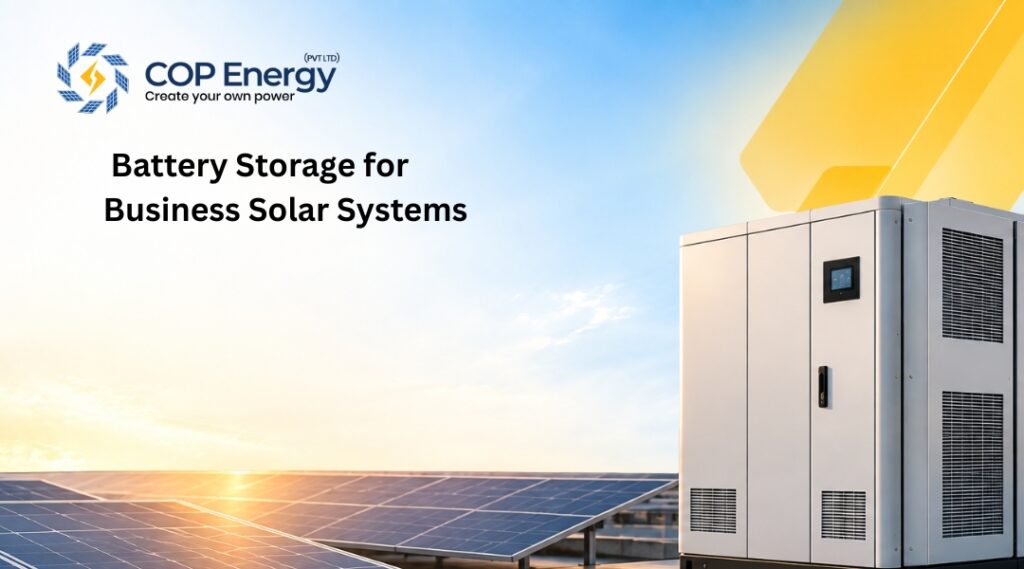
If energy storage is a key requirement, businesses and homeowners can explore COP Energy’s battery energy storage solutions .
2. Use Solar Energy at Night
Battery storage makes it possible to use stored solar energy after solar generation has declined.
Typical energy flow:
Daytime
Solar panels generate electricity.
↓
Immediate consumption
The home uses the required electricity.
↓
Battery charging
Available energy charges the battery.
↓
Evening
Stored energy can supply selected loads.
This can increase the household’s ability to consume its own solar generation instead of depending entirely on the grid after sunset.
3. Greater Energy Independence
A solar-plus-battery system can reduce dependence on grid electricity further than solar alone.
However, homeowners should not interpret this as complete energy independence. A system’s ability to operate without the grid depends on several technical factors.
- Solar capacity
- Battery capacity
- Household consumption
- Backup loads
- Weather conditions
- Inverter capacity
- System configuration
4. Better Control of Energy
Battery storage introduces another controllable component into the home energy system.
Depending on the system architecture, energy can be managed around:
- Solar generation
- Household demand
- Battery state of charge
- Backup requirements
- Grid availability
This can provide greater flexibility when managing household electricity consumption.
Does a Battery Automatically Reduce Electricity Bills?
No. A battery can provide additional energy-management benefits, but it does not automatically guarantee lower electricity bills.
The economics depend on:
- Solar generation
- Household electricity consumption
- Electricity tariffs
- Battery capacity
- Battery efficiency
- Battery cycling
- System cost
- Applicable metering arrangement
- Battery lifespan
Homeowners should therefore be cautious about generic claims such as “Adding a battery will reduce your electricity bill by 50%.”
Actual savings can vary significantly depending on the home’s electricity consumption, solar generation, tariffs, battery usage and system design.
Should You Back Up the Entire House?
Not necessarily. A more practical approach can be to divide household loads into critical and non-critical categories.
Critical Loads
- Lights
- Fans
- Refrigerator
- Internet equipment
- Security system
- Computer
- Essential appliances
Non-Critical Loads
- Large air-conditioning units
- Electric water heaters
- Washing machines
- High-power kitchen equipment
- Other heavy electrical loads
Backing up only essential loads can reduce the required battery capacity and may make the overall system more economical.
What About Air Conditioners?
Air conditioning is an important consideration for Hyderabad homes. An AC can consume significantly more electricity than basic lighting and fans.
If you want to operate ACs during a power outage, the solar-plus-battery system must be sized accordingly.
The design should consider:
- AC capacity
- Number of AC units
- Operating power
- Desired runtime
- Other simultaneous loads
- Inverter capacity
- Battery capacity
A battery designed for lights, fans and refrigeration should not automatically be expected to operate multiple AC units for several hours.
Solar Plus Battery for Homes With Electric Vehicles
EV adoption is another reason homeowners may want to consider their future energy requirements.
An EV charger can become a significant household electrical load. If you are planning to purchase an EV, it makes sense to consider charging requirements while designing your solar system.
Potential energy flow:
Solar → Home → Battery → EV
The actual configuration depends on the solar system, inverter, battery, EV charger and electrical infrastructure.
Homeowners planning EV adoption can also explore EV charging infrastructure from COP Energy.
Solar Alone vs Solar Plus Battery: Which Is Better for Different Homes?
Home With Reliable Grid Supply
If grid electricity is reliable and the primary goal is bill reduction:
Solar alone may be sufficient.
Home With Frequent Power Interruptions
If power outages are inconvenient and essential appliances need to continue operating:
Solar plus battery may be more suitable.
Home With High Evening Consumption
If most electricity is consumed after sunset:
Battery storage may provide additional value.
Home With Limited Budget
If the initial investment needs to remain low:
Solar alone may be the better starting point.
Home Seeking Greater Energy Independence
If the homeowner wants to reduce grid dependence and have backup capability:
Solar plus battery may be worth considering.
What Should You Check Before Installing a Solar System?
Before deciding between solar alone and solar plus battery, review the following factors.
1. Monthly Electricity Consumption
Review multiple electricity bills rather than relying on a single month.
2. Daytime Electricity Usage
Determine how much electricity your home consumes while the solar system is producing power.
3. Evening Electricity Usage
Identify the loads that operate after sunset.
4. Backup Requirements
List the appliances that absolutely need to operate during a power cut.
A professional system assessment can help determine the appropriate configuration. Explore solar EPC solutions for system planning, engineering and installation.
Frequently Asked Questions
Is solar plus battery better than solar alone?
Not for every home. Solar alone may be more appropriate when the primary objective is electricity-bill reduction, while solar plus battery can be more suitable when backup power and greater energy independence are important.
Is a battery necessary for rooftop solar in Hyderabad?
No. Many homes can use rooftop solar without battery storage. The requirement depends on electricity consumption, backup needs, grid conditions, metering arrangements and budget.
Can solar power a home during a power cut?
A standard grid-connected solar system should not automatically be assumed to provide backup during an outage. Backup operation requires suitable equipment and system configuration.
Can I use solar energy at night?
Solar panels do not generate electricity at night. However, a battery can store energy generated during the day and make it available later, subject to system design and available stored energy.
Can I add a battery to an existing solar system?
In some installations, battery storage can be added later. Compatibility between the existing inverter, battery, protection equipment and electrical architecture should be assessed before installation.
Can a solar battery run an AC?
Yes, if the inverter and battery are appropriately sized for the AC and other simultaneous loads. Running air conditioning from battery backup can significantly increase the required system capacity.
How long does a solar battery last?
Battery lifespan depends on battery chemistry, cycling, temperature, depth of discharge, operating conditions and manufacturer specifications. Warranty terms should be carefully reviewed before purchase.
Does a battery guarantee lower electricity bills?
No. Battery economics depend on system cost, electricity consumption, solar generation, tariffs, efficiency, cycling and applicable metering arrangements.
Is rooftop solar worth considering for Hyderabad homes?
Rooftop solar can be a practical option for homes with suitable roof space and meaningful electricity consumption. The actual financial outcome depends on system design, consumption, tariffs, incentives and applicable regulations.
Important Solar Regulations and Government Resources
Before installing a rooftop solar system, homeowners should review the applicable regulations and government information.
- Telangana Rooftop Solar Regulations
- MNRE Grid Connected Rooftop Solar Programme
- PM Surya Ghar and MNRE Solar Schemes
- TGREDCO Rooftop Solar Information
- Bureau of Energy Efficiency
Conclusion
Choosing between solar plus battery vs solar alone depends on what you want your home energy system to achieve.
If your primary goal is to reduce electricity bills, generate clean energy and keep the initial investment lower, a grid-connected solar-alone system may be the right choice. It can help your home generate electricity during the day while allowing the grid to support your electricity requirements when solar generation is unavailable.
On the other hand, if you want backup power, greater energy independence and the ability to use stored solar electricity after sunset, a solar-plus-battery system can provide additional value. However, the higher upfront investment, battery degradation and long-term replacement considerations should be evaluated before making a decision.
For Hyderabad homeowners, the best approach is to start with actual electricity consumption, daytime and evening loads, backup requirements, rooftop conditions and future energy needs.
If you are comparing your options, explore solar solutions in Hyderabad from COP Energy to understand which configuration may suit your requirements.
Need Help Choosing the Right Solar System?
Not sure whether your home needs solar alone or solar plus battery? COP Energy can help evaluate your electricity consumption, rooftop potential, backup requirements and future energy needs.
Contact COP Energy to discuss your residential solar requirements.