Solar Performance Ratio Explained: How to Measure a System’s Real Efficiency
Solar installation is an important investment for businesses looking to generate cleaner electricity and manage long-term energy requirements. However, installing solar panels is only the beginning. Businesses also need to understand how effectively their solar system is performing.
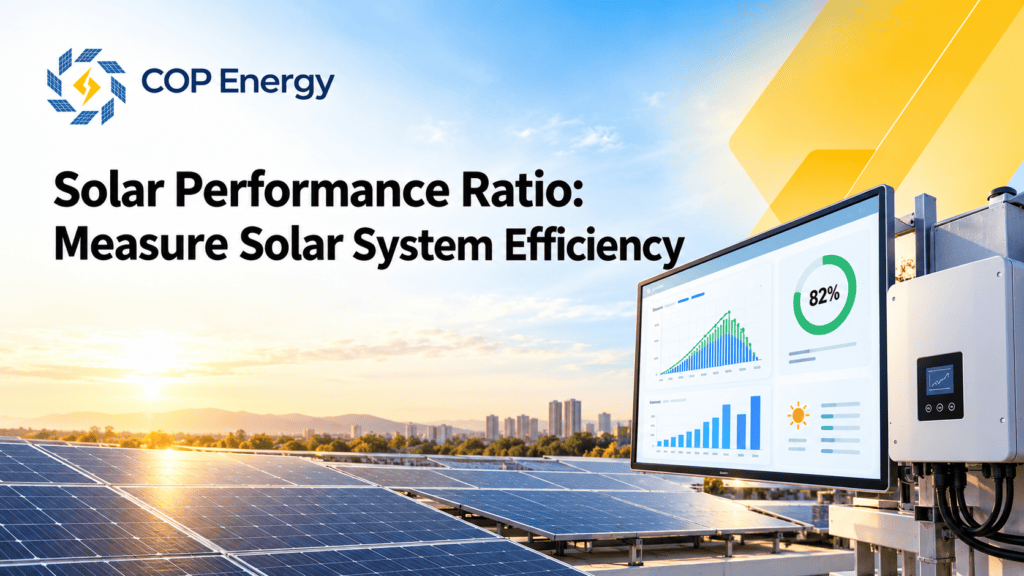
Solar Performance Ratio (PR) is an important metric that helps evaluate the real performance of a solar PV system. By considering actual energy generation against available solar irradiation, PR provides businesses with a clearer view of system performance.
What Is Solar Performance Ratio?
Solar Performance Ratio measures the actual energy generated by a solar PV system against the energy it could theoretically produce under the available solar irradiation. It considers various system losses, making it more useful than looking at energy generation alone.
A PR value can help businesses understand whether their solar installation is performing as expected and identify changes that may require attention.
Solar Performance Ratio provides a useful way to assess the overall performance of a solar PV system while accounting for different operational and system losses.
Why Is Solar PR Important for Businesses?
For commercial and industrial solar installations, performance can be affected by several factors. Regularly monitoring PR can help identify performance variations and support timely maintenance.
This is particularly relevant for businesses that depend on solar power as part of their broader energy strategy. Consistent monitoring can provide greater visibility into how the system is performing over time.
Factors That Can Affect Solar PR
Several operational and environmental factors can influence the performance of a solar PV system. Important factors include:
- Soiling: Dust and dirt can reduce the amount of sunlight reaching solar modules.
- Temperature: High module temperatures can affect electricity generation.
- Shading: Buildings, structures or other obstacles can reduce solar output.
- Inverter losses: Converting DC electricity into AC electricity results in energy losses.
- Equipment issues: Inverter or other component problems can affect system performance.
- Downtime: Maintenance or unexpected faults can reduce overall generation.
Monitoring these factors helps businesses take a more informed approach to solar system management and maintenance.
How COP Energy Supports Solar Performance
COP Energy provides solar energy solutions for residential, commercial and industrial requirements, along with solar monitoring and AMC support.
Monitoring system performance can help businesses identify unusual changes in generation and determine when inspection or maintenance may be required.
For businesses, solar performance is not only about the number of units generated. Understanding how efficiently the complete system operates is equally important.
Businesses looking for professional support can explore COP Energy’s contact page to discuss solar monitoring, maintenance and energy requirements.
For additional technical information about photovoltaic system performance and monitoring, businesses can also refer to resources published by the National Renewable Energy Laboratory (NREL) .
Conclusion
Solar Performance Ratio gives businesses a practical way to understand the real efficiency of their solar PV system. Regular monitoring and maintenance can help identify performance losses and support consistent energy generation.
With COP Energy’s solar solutions, monitoring and AMC support, businesses can manage their solar investment with greater visibility and make informed decisions about system performance.
Monitor and Maintain Your Solar System
Get professional support for solar performance monitoring, maintenance and system requirements.
Discuss Your Solar RequirementsFrequently Asked Questions
What does Solar PR measure?
Solar Performance Ratio measures actual solar energy generation against expected generation based on available solar irradiation.
What can reduce solar PR?
Soiling, heat, shading, electrical losses, equipment issues and downtime can affect Solar Performance Ratio.
Can solar PR be monitored regularly?
Yes. Solar monitoring systems can track generation and performance trends over time.