How Solar Carports Can Power EV Charging Stations for Businesses
Learn how solar carports for EV charging can combine renewable electricity generation, parking infrastructure and EV charging for commercial and industrial businesses.
Primary Keyword: Solar Carports for EV ChargingAs electric vehicles become more common, businesses are increasingly looking at how to provide convenient and reliable EV charging infrastructure for employees, customers, visitors and company fleets.
At the same time, businesses are looking for practical ways to generate renewable electricity and manage energy costs.
This creates an opportunity to combine two infrastructure requirements:
Solar generation + EV charging
One of the most practical ways to do this is through a solar carport.
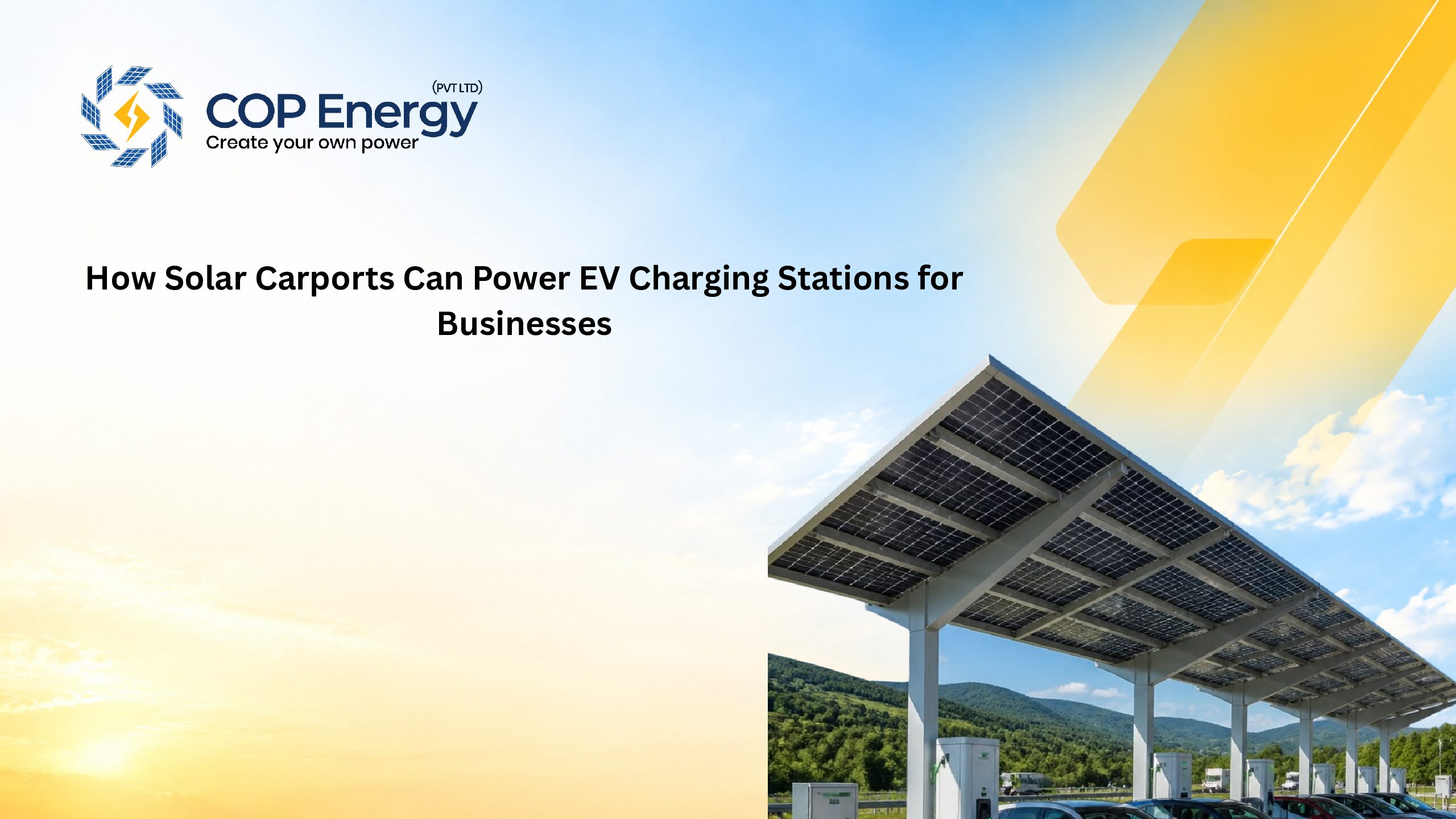
A solar carport uses a parking structure fitted with photovoltaic panels to generate electricity while providing shelter for parked vehicles. The Bureau of Energy Efficiency EV-charging guidance describes solar carports as structures that can provide parking shelter while generating renewable electricity for on-site use, including EV charging, and discusses solar carports with battery storage.
For a business, this means an existing parking area can potentially become more than a place to park vehicles. It can become part of the company’s energy infrastructure.
What Is a Solar Carport?
A solar carport is a covered parking structure with solar panels installed on its roof or canopy.
Instead of using land purely for parking, the structure can perform multiple functions:
Vehicle Shelter
Provides shade and helps protect parked vehicles from weather.
Solar Generation
Uses photovoltaic modules to generate renewable electricity on-site.
EV Charging
Can support EV charging infrastructure within the parking area.
Businesses considering a complete commercial system can also review COP Energy’s Commercial & Industrial Solar Solutions for broader solar system planning.
How Solar Carports Can Power EV Charging Stations
A solar carport can be connected to the site’s electrical system so that solar electricity contributes to the energy required by EV chargers. The exact electrical architecture depends on the project design, charger capacity, solar generation profile and grid connection.
A typical commercial configuration can follow this energy flow:
Solar Carport → Electrical System → EV Chargers → Vehicles
Where battery storage is included, the configuration can also be:
Solar Carport → Battery Storage → EV Charging / Building Loads
Businesses can evaluate COP Energy’s EV Charging Solutions when planning charging infrastructure.
Benefits of Solar Carports for Businesses
1. Better Use of Parking Areas
A solar carport allows a parking area to perform more than one function. It can provide vehicle shelter while also supporting renewable-energy generation.
2. On-Site Renewable Electricity
Solar generation can be used on-site, including for EV charging, subject to the system’s electrical configuration and applicable electricity arrangements.
3. Potential Reduction in Grid Dependence
When solar electricity is consumed on-site, the business may reduce the amount of electricity it needs to purchase from the grid. Actual savings depend on generation, self-consumption, tariffs, system cost and the project’s operating profile.
4. Support for EV Fleet Electrification
Companies operating electric cars, two-wheelers, delivery vehicles or other EV fleets can integrate charging into their wider energy strategy.
5. Scope for Battery Integration
Battery storage can provide additional flexibility where the business needs energy shifting, peak management or charging outside the strongest solar-generation period.
For battery-based applications, see COP Energy’s Battery Energy Storage System solutions.
Solar Carports + EV Charging + Battery Storage
A business does not necessarily need batteries to build a solar EV charging station. A grid-connected solar charging system can operate without battery storage.
However, BESS may become useful when charging demand does not align with solar production or when the business wants additional control over energy use.
Depending on the project, an integrated system can be designed around:
- Solar carport generation
- EV charging infrastructure
- Battery energy storage
- Building electricity loads
- Grid electricity
- Energy management and monitoring
The EV Charging Infrastructure Guidelines published by the Bureau of Energy Efficiency provide official guidance relevant to EV charging infrastructure and solar-carport configurations.
How Many EV Chargers Can a Solar Carport Support?
There is no universal number of EV chargers that one solar carport can support.
The appropriate number depends on:
- Solar generation capacity
- Charger power rating
- Electrical infrastructure
- Available grid capacity
- Parking layout
- Number of vehicles
- Charging behaviour
- Expected daily energy demand
- Battery storage, if included
A site assessment should therefore be completed before selecting the number and type of commercial EV charging stations.
Where Can Businesses Use Solar EV Charging Stations?
- Corporate offices
- IT parks and business campuses
- Factories and manufacturing plants
- Warehouses and logistics facilities
- Hotels and resorts
- Shopping and retail properties
- Hospitals and healthcare campuses
- Educational institutions
- Fleet and delivery facilities
- Commercial parking facilities
In Hyderabad, businesses evaluating EV charging stations in Hyderabad should consider parking availability, local electrical infrastructure, solar resource, charger requirements and the site’s operating schedule.
What Should Businesses Check Before Solar Carport Installation?
Parking Area
Check the available parking footprint, vehicle movement, parking orientation, charger locations and access requirements.
Structural Feasibility
The carport structure should be engineered for the project location, solar modules, wind loads, drainage and long-term operating conditions.
Solar Potential
Assess orientation, shading, usable canopy area and expected solar generation before finalising system capacity.
Electrical Capacity
Review the site’s existing electrical infrastructure and available capacity before adding EV charging loads.
Charging Demand
Estimate how many vehicles will charge, when they will charge and how much energy they will require.
Battery Requirements
Determine whether battery storage is justified based on charging behaviour, energy shifting, peak management and project economics.
Safety and Approvals
Electrical protection, earthing, fire-safety considerations, structural requirements and applicable approvals should be reviewed during project design.
Solar Carport for Businesses: Key Design Considerations
| Design Factor | What to Evaluate |
|---|---|
| Parking Layout | Vehicle movement, parking orientation and charger placement |
| Solar Capacity | Available canopy area, shading and expected energy generation |
| EV Chargers | AC/DC charging requirements and expected charging demand |
| Electrical Infrastructure | Existing capacity, protection and grid connection |
| Battery Storage | Energy shifting, peak management and charging flexibility |
| Monitoring | Solar production, charger usage, energy consumption and system performance |
| O&M | Cleaning, inspection, electrical maintenance and equipment support |
Solar and EV Charging: A Practical Energy Strategy
Businesses should not evaluate solar generation and EV charging as completely separate infrastructure investments. The stronger approach can be to analyse them together with the site’s existing electricity demand.
Electricity Demand → Solar Generation → EV Charging → Battery Storage → Energy Management
The final configuration should be based on actual electricity consumption, EV charging behaviour, available parking, solar resource, electrical capacity and commercial objectives.
Official Solar and EV Resources
Businesses should review current official policies, standards and technical guidance before implementing a project.
- EV Charging Infrastructure Guidelines — Bureau of Energy Efficiency
- MNRE solar policies and guidelines — Ministry of New and Renewable Energy
- MNRE Approved List of Models and Manufacturers (ALMM) — Ministry of New and Renewable Energy
Frequently Asked Questions
1. What is a solar carport?
A solar carport is a covered parking structure equipped with solar photovoltaic panels. It provides vehicle shelter while generating electricity that can be used on-site, including for EV charging.
2. Can solar panels directly power EV chargers?
Yes. Solar generation can be directed to EV chargers through an appropriately designed electrical system. Grid power can supplement the system when solar generation is insufficient.
3. Do solar EV charging stations require batteries?
No. A business can operate a grid-connected solar EV charging system without batteries. BESS can be added when there is a specific requirement for energy shifting, peak management or additional charging flexibility.
4. Can solar carports reduce electricity costs?
They can potentially reduce the electricity purchased from the grid by generating power on-site. Actual savings depend on solar generation, self-consumption, tariff structure and project costs.
5. Are solar carports suitable for factories?
Yes. Factories may have large parking areas, substantial electricity consumption and EV or fleet-charging requirements. A feasibility assessment is necessary to determine suitability.
6. How many EV chargers can a solar carport support?
There is no fixed number. Charger quantity depends on solar capacity, electrical infrastructure, grid capacity, parking layout, vehicle demand and charging strategy.
7. Can a solar carport work with battery storage?
Yes. Solar energy can be stored in a battery and used later for EV charging or other loads, depending on the system architecture. BEE’s EV-charging guidance specifically describes solar carports with battery storage.
8. What should I check before installing a solar carport?
Review parking space, structural feasibility, solar potential, electrical capacity, EV demand, charger selection, battery requirements, safety, approvals, O&M and lifecycle economics.
9. Is solar carport installation suitable for businesses in Hyderabad?
It can be, particularly where businesses have adequate parking and a suitable solar resource. Feasibility depends on the specific site, electrical system, structure and business requirements.
Conclusion
Solar carports can transform ordinary commercial parking areas into productive energy infrastructure.
Instead of treating solar generation, EV charging and battery storage as separate investments, businesses can consider an integrated system built around:
Solar Carport + EV Charging
and, where appropriate:
Solar Carport + EV Charging + BESS + Energy Management
The most important part is not simply installing solar panels or chargers. It is designing the system around actual electricity consumption, EV charging behaviour, parking capacity, available solar resource, electrical infrastructure and commercial objectives .
BEE’s national EV-charging guidance recognises solar carports as a way to combine vehicle shelter with renewable-energy generation and describes battery-integrated configurations for storing solar energy for EV charging.
For businesses, this can create a more coordinated approach to:
Generate renewable energy → Charge EVs → Manage demand → Store energy → Monitor performance
The right system will depend on the business, but the underlying opportunity is clear: parking infrastructure can become part of a broader commercial energy strategy.
For companies planning EV infrastructure today, designing charging and solar together can provide a stronger foundation for future energy requirements than treating them as two completely separate projects.
To explore broader commercial and industrial solar options, visit COP Energy’s Commercial & Industrial Solar Solutions or review its EV Charging Solutions .
Plan Your Solar EV Charging Project
Discuss your parking area, electricity consumption, EV charging requirements and energy goals with COP Energy.
Contact COP Energy