Solar Power for Textile Industries: A Practical Approach to Reducing Manufacturing Energy Costs
India’s textile industry plays an important role in manufacturing, exports and employment. However, textile production involves several energy-consuming processes, including spinning, weaving, knitting, dyeing and finishing.
Electricity is required to operate machinery, lighting, ventilation and other production equipment. For manufacturers managing significant monthly electricity expenses, industrial solar power can offer an additional way to meet part of their energy requirements.
If you run or manage a spinning mill, a knitting unit or a processing house, you already know the electricity bill is rarely a small line item. It arrives every month, whether orders are strong or slow. That is why more factory owners are asking a simple question: can the roof above the production floor take on some of that load?
This guide looks at where solar power fits in a textile facility, what is worth checking before you commit, and how to plan an installation that matches the way your plant actually runs.
1. Why Textile Manufacturers Are Exploring Solar Energy
Few industries put as many motors, drives, fans and lighting circuits under one roof as textiles do. A single spinning unit can run thousands of spindles, while a weaving shed adds looms, compressors and humidification plants. All of that adds up quickly on the meter.
Managing Electricity Consumption
Textile factories often operate multiple machines simultaneously. Installing solar panels can help generate electricity during daylight hours and support compatible production activities. In practical terms, the solar system supplies part of the plant’s daytime load directly, so the factory draws less from the grid while the sun is up.
How much it contributes depends on the installed capacity, local weather, panel orientation and how much of your consumption falls within daylight hours. A unit that runs mostly during the day can use more of what the panels generate than one that runs heavily at night.
Improving Sustainability
Using renewable electricity can contribute to a manufacturer’s environmental objectives and support sustainability reporting requirements from customers and supply-chain partners.
Many international buyers now ask suppliers about emissions, energy sources and environmental practices. Renewable electricity gives a manufacturer something concrete to report, instead of a general statement of intent.
Planning with More Predictability
Grid tariffs and industrial charges can change over time. On-site generation does not remove that exposure, but it can make a part of your energy supply easier to plan around. That is useful when you are preparing annual budgets or quoting prices for long-term orders.
Keep in mind: For most textile plants, solar works alongside the grid rather than replacing it. The aim is to cover a sensible share of daytime consumption, not to disconnect from the utility.
2. Which Textile Operations Can Benefit from Solar?
Not every process in a textile unit uses energy in the same way. Solar photovoltaic (PV) panels generate electricity, so they suit the electrical side of your operation best. Here is how that plays out across different types of facilities.
Spinning and Weaving Units
These operations use electrically powered machinery and may have daytime consumption that can align with solar generation.
Spinning mills run carding, drawing, ring frames and winding machines, while weaving sheds depend on looms and auxiliary equipment. Many of these units work across several shifts. The portion of the load that falls between morning and late afternoon is the part solar can realistically support. Humidification and ventilation systems, which many such units use to keep working conditions steady, also draw electricity during the day.
Knitting and Garment Units
Knitting machines, sewing lines, cutting tables, pressing equipment, compressors and lighting make garment factories largely electrical. Since many of these units follow regular daytime shifts, their consumption pattern often lines up well with solar generation.
Dyeing and Processing Facilities
Dyeing, washing and finishing operations involve different electricity and thermal-energy requirements. Solar PV can address part of the electrical demand, but it should not be assumed to replace process heat requirements.
Pumps, motors, effluent treatment equipment and lighting are all electrical loads that solar power can support. Heat for dye baths, drying and finishing, on the other hand, usually comes from boilers, thermic fluid heaters or other thermal systems. Those need a separate assessment, and it is better to treat them as a different conversation from rooftop solar PV.
Warehouses and Support Buildings
Fabric stores, packing areas, offices and canteens often sit under large, flat roofs that suit solar panels well. Their daytime loads are simple to support, and they can add useful installation area when the main production roof is limited.
3. What Textile Businesses Should Evaluate Before Installing Solar
Before installation, manufacturers should examine electricity bills, production schedules, rooftop availability, structural strength, shading and electrical infrastructure.
They should also compare solar system capacity with daytime electricity consumption to estimate potential self-consumption and project economics. Here is what each of those checks involves.
Electricity Bills and Tariff Structure
Gather at least twelve months of bills if possible. Note the units consumed each month, contract demand, maximum demand, tariff category and any time-of-day charges. Seasonal swings are common in textiles because order books, shifts and weather change through the year, and a full year of data shows those patterns.
Production Schedule and Daytime Load
A factory that runs full shifts from morning to evening has a very different profile from one that peaks at night. Map out when your heavy machines run. The overlap between that schedule and sunlight hours helps estimate how much solar electricity the plant can use directly, which is known as self-consumption.
Rooftop Space and Structural Strength
Textile buildings come in many forms, such as concrete slabs, metal-sheet sheds, saw-tooth roofs and older sheeted roofs. Each needs a different mounting approach. A qualified engineer should check structural strength, roof age, sheet condition, drainage and safe access. If a roof is close to the end of its life, repairs or replacement may need to be planned before panels go on.
Shading and Orientation
Chimneys, water tanks, nearby buildings, ventilators and roof-mounted equipment can all cast shadows. Even partial shading can reduce the output of part of an array, so panel layout and orientation deserve careful attention during design.
Electrical Infrastructure and Grid Connection
Review your transformers, panels, cabling, switchgear, protection systems and power factor. Grid-connection rules, net-metering or open-access provisions and approval procedures vary by state and distribution company, so confirm what applies to your facility before the design is finalised.
System Capacity Compared with Consumption
Bigger is not automatically better. A system sized around your daytime consumption usually makes better use of what it produces than one sized only to fill the largest available roof.
Practical tip: When you speak to any solar provider, bring your last year’s electricity bills and a rough shift schedule. Those two documents allow a far more realistic estimate than a general conversation about roof size.
4. Practical Benefits for Textile Manufacturers
When a solar system is designed around the factory’s real consumption, it can offer several practical advantages. The size of each benefit depends on the project, so it helps to treat them as possibilities to evaluate rather than guarantees.
Lower Dependence on Grid Electricity
Electricity generated on-site and used directly can offset a portion of what the factory would otherwise draw from the grid. The financial result depends on solar generation, self-consumption, tariffs and the installation cost.
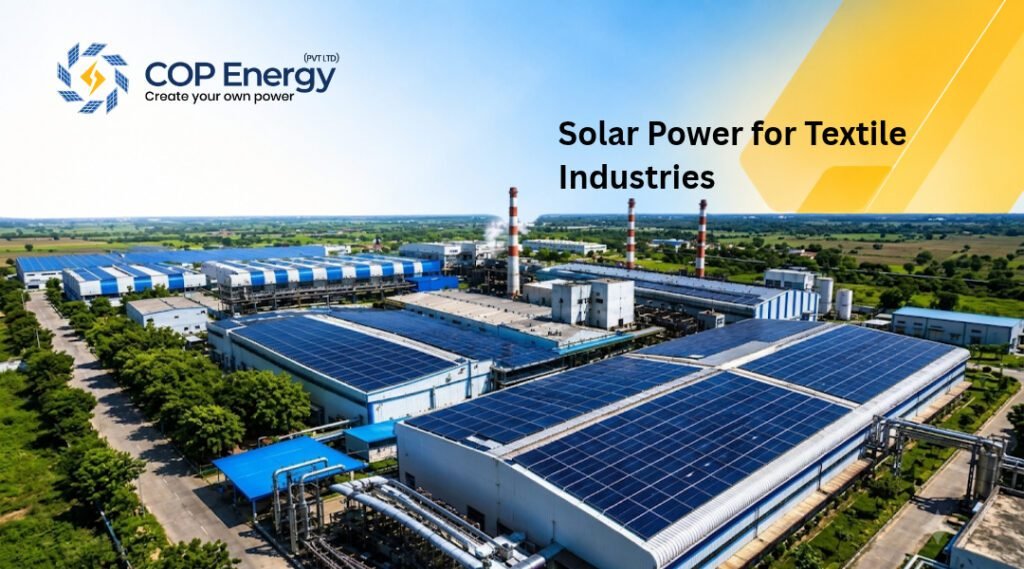
Better Use of Idle Roof Space
Most textile buildings have large roofs that serve only one purpose. Solar panels can turn that unused area into a source of electricity without taking up any production floor space.
Clearer Visibility of Energy Use
Monitoring systems show how much electricity the panels generate and when. Looking at that alongside your consumption data can help plant managers spot patterns and find areas where energy is being used less efficiently.
Support for Buyer and Brand Expectations
Customers increasingly look at sustainability practices when choosing manufacturing partners. A working solar installation is a visible, measurable step that can strengthen those conversations.
5. How to Plan a Solar Installation for a Textile Unit
A good project starts with questions, not panels. The steps below give a simple order of work that suits most textile facilities.
Step 1: Study Your Consumption
Review bills, connected load, peak demand and daily operating schedules. Identify the machines and departments that use the most electricity and note when they run.
Step 2: Carry Out a Site Survey
Inspect roof strength, usable area, shading, orientation and the condition of existing electrical equipment. This shows what is practical on your particular site.
Step 3: Design the System
Select panels, inverters, mounting structures and protection equipment based on site conditions and your daytime load. A sensible design balances capacity, available space and budget.
Step 4: Confirm Approvals and Connection Requirements
Check the technical and regulatory requirements of your state and distribution company, including connection procedures and applicable policy conditions, before installation begins.
Step 5: Install, Monitor and Maintain
After commissioning, keep track of generation, clean the panels regularly and schedule periodic inspections. Textile environments produce a lot of lint and dust, and a layer of it on the panels can reduce output, so cleaning deserves a place in the maintenance plan.
- Collect twelve months of electricity bills.
- Map your shift pattern and heavy-load hours.
- Arrange a structural and electrical assessment.
- Size the system around daytime consumption.
- Confirm approvals and grid-connection rules.
- Set up monitoring and a cleaning schedule.
6. Common Mistakes to Avoid
Most problems with industrial solar projects come from planning gaps, not from the technology itself. These are the ones worth watching for:
- Sizing by roof area alone. Capacity should follow consumption, not just the space available.
- Ignoring roof condition. Installing on a weak or ageing roof can lead to expensive rework later.
- Assuming solar will cover process heat. Solar PV supplies electricity, not the thermal energy used in dyeing and finishing.
- Skipping the approvals stage. Connection and policy requirements differ between states and should be confirmed early.
- Overlooking cleaning and maintenance. Lint, dust and weather all affect performance over time.
Conclusion: A More Considered Way to Plan Factory Energy
Industrial solar power can help textile manufacturers diversify their electricity sources and improve long-term energy planning. A properly designed installation should reflect the factory’s production requirements, available space and financial objectives.
The strongest projects usually begin with honest numbers: how much electricity the plant uses, when it uses it and what the roof can safely carry. With that groundwork in place, solar becomes a practical addition to the energy mix instead of a guess.
Planning solar for your textile manufacturing facility? Connect with COP Energy to discuss commercial and industrial solar requirements.
External references: Ministry of Textiles | NITI Aayog – Industry Energy Transition
Explore Industrial Solar Solutions with COP Energy
Thinking about solar for your spinning, weaving, knitting or processing facility? Speak with COP Energy about commercial and industrial solar possibilities for your plant.
Explore COP Energy