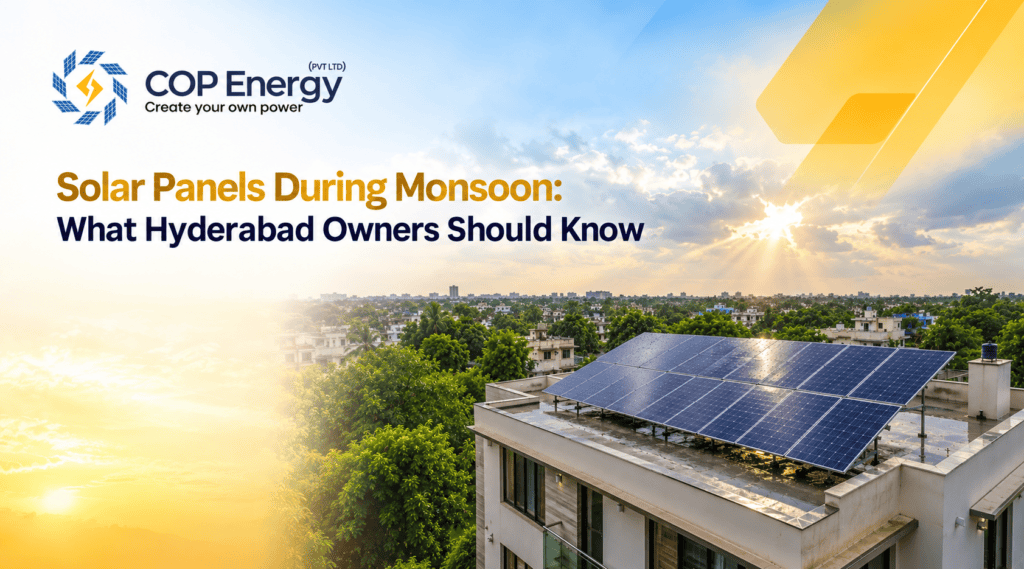
Solar Panels During Monsoon: What Hyderabad Owners Should Know
Monsoon often makes property owners wonder whether rooftop solar panels can continue producing electricity when the sky is cloudy and sunlight is limited. The answer is yes. Solar panels can still generate electricity during rainy weather, although output may decrease when available sunlight is lower.
For Hyderabad homes and businesses considering rooftop solar, understanding seasonal changes can help set realistic expectations about energy generation and system performance.
How Does Monsoon Affect Solar Panels?
Solar panels do not require bright, direct sunshine at every moment to generate electricity. They can use available daylight, including diffused sunlight that passes through clouds.
During heavy cloud cover or rainfall, solar generation can be lower than on a clear day. However, monsoon conditions do not mean that a properly installed solar system stops working completely.
The actual reduction depends on cloud density, rainfall, time of day, panel orientation, shading and the overall solar resource available at the site.
Do Solar Panels Work on Cloudy Days?
Yes. Cloudy weather reduces the amount of solar irradiance reaching the panels, but daylight is still available. As a result, the system may continue producing electricity at a reduced level.
This is why solar projects should be evaluated using expected annual energy generation rather than judging the system only by its performance during a few cloudy or rainy days.
Can Rain Help Solar Panels?
Rain can help wash away some accumulated dust and loose surface dirt. Cleaner panels can support better light absorption when brighter weather returns.
However, rain does not remove every type of contamination. Bird droppings, leaves, oily deposits and stubborn dirt may remain. Regular inspection and appropriate maintenance are therefore still important.
What Should Hyderabad Owners Check?
If you are planning or already operating a rooftop solar system, pay attention to:
- Panel cleanliness and physical condition
- Water drainage around the installation
- Mounting structure and fasteners
- DC and AC cable connections
- Shading from trees or nearby buildings
- Inverter performance and system alerts
- Monthly and long-term energy-generation trends
A properly designed and maintained system can continue contributing to your property’s electricity needs throughout changing weather conditions.
Plan Solar for the Whole Year
Solar system performance should be evaluated using longer-term generation data rather than one rainy month. System size, roof orientation, shading, electricity consumption and expected annual generation all matter when planning a rooftop solar project.
For Hyderabad property owners, a professional assessment can help determine the appropriate system design and realistic generation expectations.
Learn more about COP Energy’s solar solutions and explore the company’s solar project portfolio for more information about solar applications.
Final Thought
Monsoon should not be a reason to avoid solar energy. Instead, it highlights the importance of proper system design, installation, monitoring and maintenance.
Solar is a year-round energy solution. The goal is not maximum generation every rainy day, but reliable annual energy production from a properly designed system.
Plan Rooftop Solar for Your Hyderabad Property
Let COP Energy assess your electricity consumption, roof conditions and solar potential to help you plan a system around your energy requirements.
Frequently Asked Questions
Do solar panels work during monsoon?
Yes. Solar panels can continue generating electricity during monsoon because they use available daylight. Output may be lower during heavy cloud cover or rain because solar irradiance is reduced.
Does rain damage solar panels?
Rain itself normally does not damage properly installed solar panels. However, the complete system should be inspected for drainage, mounting, cables, connectors and other installation-related issues.
Can rain clean solar panels?
Rain can wash away some dust and surface dirt, but it may not remove bird droppings, oily deposits or stubborn dirt. Periodic inspection and appropriate cleaning can still be necessary.
Should I judge solar performance based on one rainy month?
No. Solar performance is better evaluated using longer-term generation data and annual energy yield because weather conditions vary throughout the year.