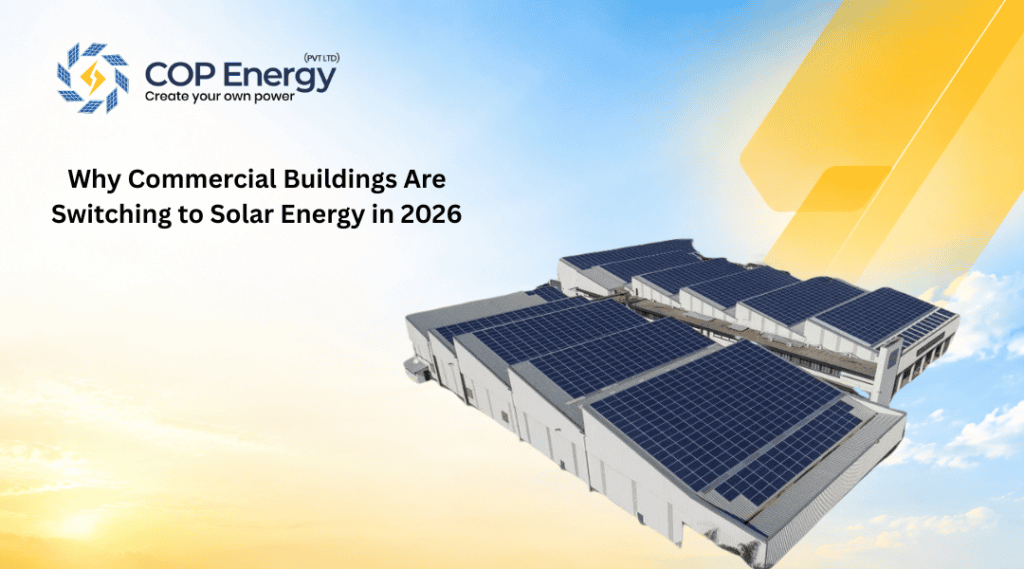
Why Commercial Buildings Are Switching to Solar Energy in 2026
Commercial buildings across India are rapidly adopting solar energy in 2026. From office complexes and shopping malls to factories, warehouses, hotels, and hospitals, businesses are investing heavily in rooftop solar systems to reduce operational costs and improve sustainability.
Rising electricity tariffs, increasing energy consumption, and growing environmental awareness are pushing businesses toward renewable energy solutions. Solar power has become one of the most reliable and cost-effective options for commercial properties looking to achieve long-term financial savings.
In addition to reducing electricity bills, solar energy also helps commercial buildings strengthen their brand image, meet sustainability goals, and gain energy independence.
Why Electricity Costs Are a Major Concern for Commercial Buildings
Commercial buildings consume large amounts of electricity every day for operations, infrastructure, cooling systems, lighting, and manufacturing processes.
- Air conditioning systems
- Lighting and elevators
- IT infrastructure and data centers
- Manufacturing equipment
- Refrigeration systems
High electricity bills directly impact profit margins, business scalability, operational efficiency, and long-term financial planning.
What Is a Commercial Solar Energy System?
A commercial solar system is a rooftop or ground-mounted solar power setup designed to meet the electricity requirements of commercial and industrial properties.
Solar Panels
Generate electricity using sunlight.
Solar Inverter
Converts solar energy into usable electricity.
Net Meter
Tracks electricity import and export to the grid.
Monitoring System
Provides real-time tracking of energy generation.
Battery Storage
Optional backup system for uninterrupted power.
Why Commercial Buildings Are Switching to Solar Energy in 2026
Rising Electricity Tariffs
Solar power helps reduce dependency on costly grid electricity.
Huge Cost Savings
Commercial solar systems can reduce electricity bills by 50% to 90%.
Faster ROI
Businesses often recover solar investment within 3 to 5 years.
Sustainability Goals
Companies are adopting eco-friendly energy solutions.
Government Incentives
Renewable energy schemes continue supporting solar adoption.
Positive Brand Image
Businesses using renewable energy attract conscious customers and investors.
Industries Rapidly Adopting Solar Energy
- Corporate office buildings
- Manufacturing units and factories
- Shopping malls
- Hotels and restaurants
- Hospitals and healthcare centers
- Educational institutions
- Warehouses and logistics centers
Benefits of Solar Energy for Commercial Buildings
Long-Term Cost Savings
Generate free electricity for decades and reduce operating costs.
Low Maintenance
Modern solar systems require minimal upkeep.
Improved Sustainability
Supports environmental responsibility initiatives.
Higher Property Value
Commercial properties with solar systems often gain market value.
Protection Against Tariff Hikes
Solar power shields businesses from rising electricity costs.
Tax Benefits
Businesses may receive accelerated depreciation and incentives.
How Net Metering Helps Commercial Buildings
Net metering allows businesses to export excess electricity generated by solar panels back to the electricity grid.
- Lower electricity bills
- Additional electricity credits
- Faster solar ROI
- Better solar energy utilization
Commercial properties with daytime operations benefit significantly from net metering systems.
Common Problems Commercial Buildings Face Without Solar Energy
- High monthly electricity bills
- Increasing operating costs
- Unpredictable tariff hikes
- Frequent power interruptions
- Environmental compliance challenges
- Higher carbon emissions
Common Mistakes Businesses Make While Installing Solar Systems
Low-Quality Panels
Cheap solar panels may reduce efficiency and increase maintenance costs.
Ignoring Future Expansion
Businesses should plan solar capacity for future growth.
Poor Roof Assessment
The building structure must safely support solar installations.
Inexperienced Installers
Professional installation is essential for long-term performance.
Improper Net Metering Setup
Incorrect approvals and setup can reduce savings.
Commercial Solar System Cost in 2026
| System Size | Estimated Cost |
|---|---|
| 10 kW | ₹5 lakh – ₹7 lakh |
| 25 kW | ₹12 lakh – ₹18 lakh |
| 50 kW | ₹22 lakh – ₹35 lakh |
| 100 kW | ₹40 lakh – ₹70 lakh |
Although the initial investment may appear high, long-term electricity savings make solar financially rewarding.
How Much Can Commercial Buildings Save?
| Solar System Size | Estimated Monthly Savings |
|---|---|
| 10 kW | ₹12,000 – ₹20,000 |
| 25 kW | ₹30,000 – ₹60,000 |
| 50 kW | ₹70,000 – ₹1.2 lakh |
| 100 kW | ₹1.5 lakh – ₹3 lakh |
Future of Commercial Solar Energy in 2026
Smart Solar Monitoring
Businesses can monitor energy production and savings in real time.
AI-Based Energy Management
Artificial intelligence improves energy optimization and maintenance.
Battery Storage Systems
More businesses are adding batteries for uninterrupted power supply.
Green Smart Buildings
Sustainable buildings with solar integration are becoming the norm.
Corporate ESG Goals
Companies are using solar energy to achieve sustainability targets.
Why Solar Energy Is a Smart Business Investment
- Reduce long-term operational costs
- Improve profitability
- Increase energy reliability
- Achieve sustainability targets
- Enhance brand reputation
As electricity prices continue rising, solar adoption is expected to accelerate further in 2026 and beyond.
Why Choose COP ENERGY for Commercial Solar Solutions?
COP ENERGY provides customized commercial solar solutions designed for maximum efficiency and savings.
- Commercial solar consultation
- Site inspection
- Customized solar design
- High-efficiency solar panels
- Professional installation
- Net metering support
- Maintenance and monitoring services
Frequently Asked Questions
Why are commercial buildings adopting solar energy in 2026?
Businesses are switching to solar energy to reduce electricity costs, improve sustainability, and achieve long-term financial savings.
Is commercial solar installation expensive?
The initial investment can be high, but long-term savings and government incentives make it financially beneficial.
How much can businesses save with solar energy?
Commercial buildings can reduce electricity bills by 50% to 90% depending on system size and energy usage.
What is the lifespan of commercial solar panels?
Most commercial solar panels last 25 years or more with proper maintenance.
Can solar systems power large commercial buildings?
Yes. Large commercial solar systems can meet significant portions of a building’s electricity demand.
What is net metering for commercial solar?
Net metering allows businesses to earn electricity bill credits for excess solar power exported to the grid.
Do commercial solar systems require maintenance?
Solar systems require minimal maintenance such as cleaning and periodic inspections.
Conclusion
Commercial buildings are switching to solar energy in 2026 because it offers a powerful combination of cost savings, sustainability, energy independence, and long-term financial benefits.
As electricity prices continue increasing, businesses are recognizing solar power as one of the smartest investments for reducing operational expenses and improving environmental responsibility.
Whether it is an office, factory, warehouse, shopping mall, or hotel, solar energy is helping businesses build a more sustainable and profitable future.