How to Protect Solar Panels From Storms, Wind & Heavy Rain
A complete guide to solar panel storm protection, wind protection, heavy rain protection, structural safety and solar maintenance.
Introduction
Solar panels are designed to operate outdoors for many years. However, extreme weather conditions such as strong winds, thunderstorms, heavy rain, hail and flying debris can create additional risks for a solar power system.
Understanding how to protect solar panels from storms is therefore important for homeowners, businesses and industrial facilities that want to maintain long-term solar performance.
Storm protection is not limited to the solar modules. The mounting structure, roof, cables, inverter, electrical connections, drainage system and surrounding environment must also be considered.
A professionally designed solar system can withstand normal environmental conditions when the equipment and mounting structure are correctly selected and installed.

Can Solar Panels Withstand Storms and Heavy Rain?
Yes. Quality solar modules are manufactured for outdoor environments and are designed to operate under changing weather conditions.
However, severe weather can affect different parts of the solar installation.
- Strong wind loads
- Heavy rainfall
- Flying debris
- Loose mounting components
- Roof leakage
- Damaged cables
- Electrical surges
- Lightning
- Falling branches
For this reason, solar system storm protection should be considered during system design, installation and maintenance.
1. Choose High-Quality Solar Panels
The first step in solar panel storm protection is selecting high-quality photovoltaic modules that are suitable for outdoor operating conditions.
Solar panels are exposed to sunlight, rain, wind, humidity, temperature changes and mechanical loads throughout their operating life.
Before purchasing solar modules, check:
- Manufacturer specifications
- Product certifications
- Mechanical load ratings
- Warranty terms
- Environmental specifications
- Installation requirements
For information about renewable-energy policies and applicable standards in India, refer to the official Ministry of New and Renewable Energy (MNRE) .
2. Use a Properly Engineered Solar Mounting Structure
One of the most important ways to protect solar panels from strong winds is to use a properly engineered mounting structure.
Solar panels installed on rooftops and elevated structures are exposed to wind pressure. A weak or incorrectly installed mounting system can increase the risk of movement or damage.
The mounting system should consider:
- Roof type
- Building structure
- Wind conditions
- Panel dimensions
- Panel orientation
- Mounting configuration
- Fasteners
- Structural loads
- Foundation requirements

Solar Carports and Storm Protection
Solar carports require careful structural engineering because solar panels are installed above parking areas and can experience significant wind exposure.
If you are planning a solar carport, learn more about Solar Carport Solutions for parking and commercial applications.
3. Secure Solar Panel Mounting Components
Loose clamps, bolts, rails and fasteners can create problems during strong winds. Proper installation and regular inspection are therefore important aspects of solar panel wind protection.
Installation teams should verify that:
- Solar panels are securely clamped
- Mounting rails are properly fixed
- Bolts are tightened correctly
- Roof anchors are secure
- Structural connections are properly installed
Never attempt to repair or tighten rooftop solar components during storms, lightning or heavy rain. Contact a qualified solar professional.
4. Inspect the Roof Before Solar Installation
For rooftop solar systems, the roof condition is an important part of the overall installation.
Before installation, inspect:
- Roof age
- Roofing material
- Structural condition
- Existing cracks
- Waterproofing
- Drainage
- Existing leakage
Installing solar panels on a roof with existing structural or waterproofing problems can create additional maintenance challenges.
For residential installations, explore Residential Solar Solutions from COP Energy.
5. How to Protect Solar Panels From Heavy Rain
Quality solar modules are designed for outdoor environments, but the complete solar installation must also be designed to handle rainfall effectively.
Protecting solar panels from heavy rain requires proper drainage, waterproofing, cable routing and electrical protection.
Potential problems include:
- Blocked roof drains
- Water accumulation
- Poor cable routing
- Improperly sealed roof penetrations
- Water entering electrical enclosures
- Blocked drainage pathways

Why Proper Drainage Is Important
Good drainage is an important part of solar panel rain protection.
The mounting structure and electrical components should not interfere with the existing roof drainage system.
During installation, designers should consider:
- Roof slope
- Drainage points
- Water flow
- Mounting positions
- Cable routing
- Maintenance access
Solar Panel Storm Protection Checklist
| Component | What to Check |
|---|---|
| Solar Panels | Cracks, damage, debris and visible defects |
| Mounting Structure | Loose bolts, clamps, movement and corrosion |
| Roof | Leaks, cracks and drainage |
| Cables | Damage, exposure and loose routing |
| Inverter | Alarms, water exposure and performance |
| Electrical System | Connections and protection devices |
| Earthing | Condition and continuity |
| Surroundings | Trees, branches and loose objects |
Storm Protection for Commercial & Industrial Solar Systems
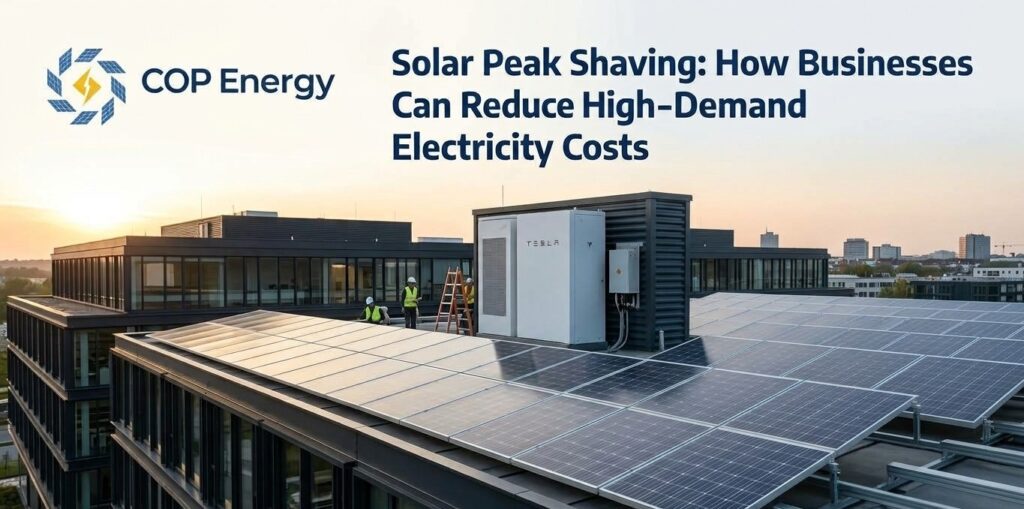
Commercial and industrial solar installations require careful attention because they normally involve larger system capacities, larger mounting structures and more complex electrical systems.
A professional commercial solar system should consider:
- Structural engineering
- Wind loads
- Roof condition
- Electrical protection
- Cable management
- Drainage
- Monitoring
- Preventive maintenance
Explore Commercial & Industrial Solar Solutions for large-scale solar requirements.
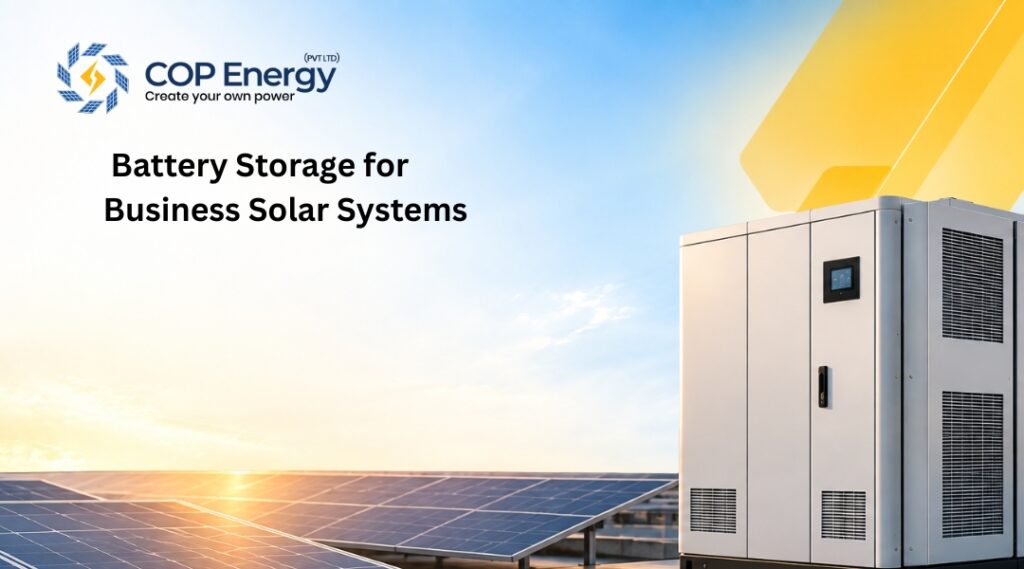
Protecting Battery Energy Storage During Severe Weather
Solar systems integrated with batteries require additional attention to electrical safety, environmental conditions, ventilation and equipment protection.
If you are planning solar-plus-storage, learn more about Battery Energy Storage System Solutions .
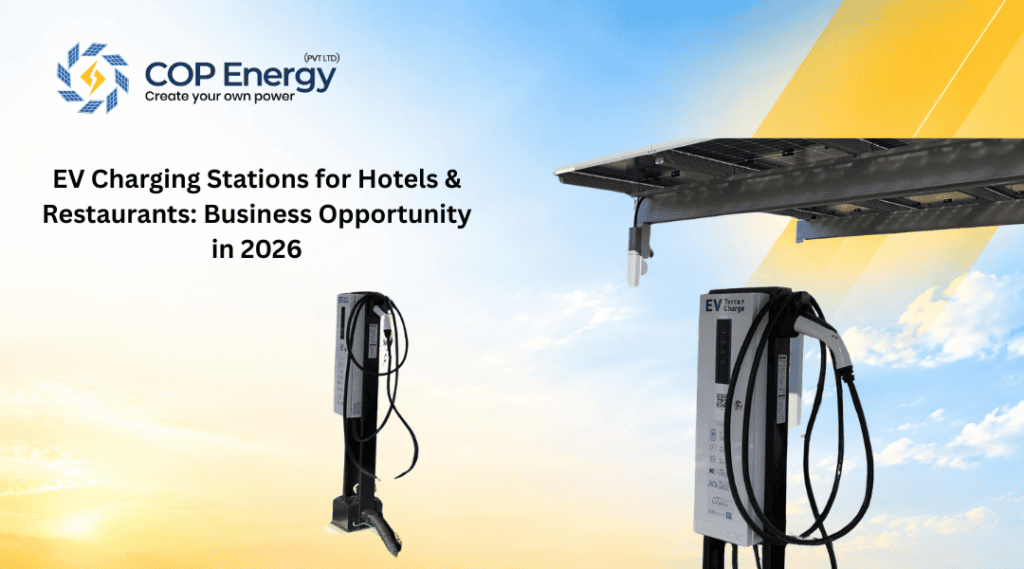
Solar Panels and EV Charging During Storms
Solar carports and commercial solar systems can be integrated with EV charging infrastructure. When these systems are combined, structural design, drainage, cable management and electrical protection become especially important.
Businesses planning an integrated solar and EV infrastructure can explore EV Charging Solutions from COP Energy.
Why Solar Panel Maintenance Is Important During Monsoon
Regular solar panel maintenance helps identify problems before they become expensive repairs.
Before and after the monsoon season, check:
- Solar panel condition
- Mounting structure
- Roof drainage
- Waterproofing
- Electrical connections
- Inverter performance
- Solar cables
- Nearby trees
Professional inspections can help identify structural, electrical and performance issues that may not be visible from the ground.
Lightning and Electrical Protection for Solar Systems
Storms can also create electrical risks, particularly during lightning events. Solar systems should therefore include appropriate electrical protection based on the design and site requirements.
Depending on the installation, professionals may evaluate:
- Earthing
- Surge protection
- Lightning protection
- DC protection
- AC protection
- Inverter protection
Electrical protection should always be designed and installed by qualified professionals.
For relevant Indian standards and technical information, visit the official Bureau of Indian Standards (BIS) .
Common Solar Panel Storm Protection Mistakes
1. Ignoring Structural Assessment
Installing a solar system without assessing the roof and mounting requirements can create unnecessary structural risks.
2. Choosing Equipment Only by Price
The cheapest equipment may not provide the best long-term value. Quality, warranty, installation and service support should also be considered.
3. Ignoring Loose Fasteners
Loose clamps and bolts can become more problematic when the system experiences strong winds.
4. Blocking Roof Drainage
Mounting structures and cables should not obstruct existing drainage pathways.
5. Ignoring Nearby Trees
Branches and falling objects can damage solar panels and mounting structures during storms.
6. Skipping Post-Storm Inspection
Some damage may not be immediately visible. Professional inspection is recommended when structural or electrical damage is suspected.
Authoritative Solar Energy Resources
For reliable information about solar policies, standards and renewable-energy requirements, use official government and standards organizations.
Frequently Asked Questions
1. Can heavy rain damage solar panels?
Quality solar panels are designed for outdoor conditions. However, severe weather can potentially affect the panels, mounting structure, cables and electrical equipment.
2. Can strong winds damage solar panels?
Strong winds can create mechanical loads on solar panels and mounting structures. Proper engineering and professional installation help reduce the risk.
3. How can I protect solar panels from strong winds?
Use a properly engineered mounting system, secure all clamps and fasteners, inspect roof connections and maintain the surrounding area.
4. Should solar panels be covered during a storm?
Generally, solar panels should not be manually covered during a storm. Accessing a rooftop during strong winds, lightning or heavy rain can be dangerous.
5. What should I do after a major storm?
Avoid accessing a damaged or wet rooftop. Perform a visual inspection from a safe location and contact a qualified solar professional if damage is suspected.
6. Can lightning damage solar panels?
Lightning can potentially damage photovoltaic modules and electrical equipment. Appropriate earthing and surge-protection measures should be evaluated by qualified professionals.
7. Does rain clean solar panels?
Rain can remove some surface dust, but it should not replace regular solar panel cleaning and maintenance.
8. How often should solar panels be inspected?
Inspection frequency depends on the installation and environmental conditions. Additional inspections are useful before and after severe weather.
9. Are solar panels safe during thunderstorms?
A properly installed system should include appropriate electrical protection. Users should avoid touching or accessing solar equipment during thunderstorms.
10. Is solar panel maintenance important during monsoon?
Yes. Monsoon maintenance should include checking drainage, mounting structures, cables, electrical equipment, roof condition and nearby trees.
Conclusion
Knowing how to protect solar panels from storms starts with proper system design and continues with regular maintenance.
The best solar panel storm protection strategy combines quality equipment, professional installation, strong mounting structures, secure fasteners, effective drainage, proper cable management and electrical protection.
Before severe weather, inspect the installation, clear drainage pathways, remove loose objects and check nearby trees.
After a major storm, inspect the system safely for damaged panels, loose structures, exposed cables, water ingress and inverter problems.
Never attempt rooftop or electrical repairs during storms, lightning or immediately after severe weather. Contact a qualified solar professional for inspection and repairs.
Protect Your Solar Investment With COP Energy
Planning a new solar installation or looking for professional solar maintenance? COP Energy provides renewable-energy solutions for residential, commercial and industrial applications.