
Solar Energy for Textile & Manufacturing Industries
Reducing industrial electricity costs through better solar design, utilization, financial planning and storage.
Electricity is one of the most important operating costs for India’s textile and manufacturing industries. Textile mills, spinning units, weaving facilities, dyeing plants, garment factories, engineering units, food-processing facilities and other industrial operations can consume significant amounts of electricity every day.
For many manufacturers, electricity is required not only for production machinery but also for lighting, ventilation, cooling, compressors, pumps, boilers, HVAC systems, material handling and other auxiliary operations.
As industrial electricity demand continues to grow, businesses are looking for ways to control energy costs without compromising production.
One increasingly important solution is solar energy for textile and manufacturing industries.
India’s solar sector has expanded significantly. According to the Ministry of New and Renewable Energy’s physical-progress data, cumulative solar capacity reached approximately 162.15 GW as of June 30, 2026, including around 121.25 GW of ground-mounted solar and 30.11 GW of grid-connected rooftop solar.
The International Energy Agency’s Electricity 2026 analysis also expects India’s electricity demand to continue growing strongly, with solar PV forecast to provide a major share of additional electricity generation through 2030.
For energy-intensive industries, this creates an opportunity to integrate solar power into a broader strategy for industrial electricity cost reduction, energy diversification and sustainability.
Why Industrial Solar System Design Matters
A poorly designed solar system can reduce expected financial performance.
Important design factors include:
- Roof orientation
- Module tilt
- Shading
- Inverter sizing
- DC/AC ratio
- Cable losses
- Temperature
- Dust
- Module degradation
- Electrical losses
- System availability
- Maintenance accessibility
For textile and manufacturing facilities, additional consideration may be required for:
- Dust
- Fibres
- Heat
- Industrial emissions
- Roof vibration
- Maintenance access
Therefore, a professional site survey should be conducted before installation. Businesses can review COP Energy’s industrial solar solutions when planning a site-specific system.
How Solar Can Improve Manufacturing Competitiveness
Solar energy can contribute to competitiveness in several ways.
Lower Energy Exposure
Reducing dependence on conventional electricity purchases can help businesses manage energy-cost exposure.
Better Cost Planning
Solar projects generally involve significant upfront or contracted costs but can provide more predictable renewable-energy economics over the project term.
Sustainability
Manufacturers increasingly face sustainability expectations from:
- Export customers
- Global brands
- Investors
- Supply chains
- Corporate procurement teams
Renewable electricity can support broader sustainability strategies.
Brand Positioning
A manufacturer using renewable electricity can strengthen its environmental positioning, provided its claims accurately reflect the energy arrangement and applicable accounting rules.
Solar Energy & Textile Export Competitiveness
Textile manufacturers competing in international markets increasingly face sustainability-related requirements from customers and supply chains.
For exporters, renewable-energy adoption can become part of a broader strategy involving:
- Energy efficiency
- Renewable electricity
- Waste reduction
- Water management
- Carbon management
- Sustainable manufacturing
Solar power alone does not make a factory fully sustainable, but it can be an important component of a wider sustainability program.
Solar and India’s Manufacturing Growth
India’s industrial electricity demand is expected to remain important as manufacturing and economic activity expand.
The IEA Electricity 2026 report reports that India’s electricity demand is expected to grow at an average annual rate of around 6.4% through 2030, while solar PV is expected to play a major role in meeting additional demand.
At the same time, India is developing domestic clean-energy manufacturing capabilities. The IEA Energy Technology Perspectives 2026 executive summary notes that industrial and trade policies are supporting expansion of domestic solar PV manufacturing.
This creates an increasingly interconnected ecosystem:
Manufacturing Growth → Higher Electricity Demand → Renewable Procurement → Solar Deployment → Lower-Carbon Industrial Production
Industrial Solar ROI: What Businesses Should Calculate
A factory should not evaluate a solar project based only on the initial installation price.
Annual Solar Generation
How much electricity is expected to be produced each year?
Self-Consumption
How much generated electricity can the factory actually consume?
Electricity Tariff Offset
What electricity cost is being avoided?
System Degradation
Solar modules gradually lose output over time.
Operations & Maintenance
Include cleaning, inspection, monitoring and replacement costs where applicable.
Financing Cost
If the project is financed, interest and financing structure influence returns.
Payback Period
How long does it take for cumulative savings to recover the investment?
Internal Rate of Return
IRR can provide a broader measure of project attractiveness.
Levelized Cost of Electricity
LCOE can help compare electricity generation economics over the project’s useful life.
Why Self-Consumption Is Important
A solar project is generally more valuable when generated electricity can be effectively consumed by the facility, subject to the applicable electricity arrangement.
For example:
High daytime factory load + strong solar generation = potentially strong solar utilization
But:
Low daytime load + high solar generation = potential surplus
Therefore, understanding the factory’s electricity load curve is essential.
Choosing Solar Equipment for Industrial Projects
Equipment selection should be based on project requirements rather than only purchase price.
Businesses should evaluate:
- Module efficiency
- Temperature coefficient
- Warranty
- Degradation
- Inverter efficiency
- Inverter warranty
- Protection systems
- Monitoring
- Service availability
- Environmental suitability
For applicable government, open-access and net-metering projects, businesses should also check the current MNRE Approved List of Models and Manufacturers (ALMM) requirements. MNRE states that ALMM-listed models and manufacturers have specific eligibility implications for government projects, government-assisted projects, open-access and net-metering projects.
Because MNRE updates its lists and implementation notices, the applicable list should be checked at the time of procurement rather than relying on an older article.
Frequently Asked Questions
1. Is solar energy suitable for textile industries?
Yes. Textile facilities can use solar electricity to offset eligible electrical loads such as spinning, weaving, lighting, pumps, compressors, ventilation and other equipment. The suitability depends on the facility’s load profile, available space and electricity arrangement.
2. Can solar reduce electricity costs for manufacturing companies?
Solar can reduce the amount of conventional electricity purchased from the grid. The actual financial benefit depends on the electricity tariff, solar generation, self-consumption, system cost, financing and applicable regulatory charges.
3. Is rooftop solar suitable for factories?
Rooftop solar can be suitable when a factory has sufficient structurally suitable roof area, good solar exposure and an appropriate electrical connection.
4. What if a factory does not have enough roof space?
The business can evaluate ground-mounted solar, open-access renewable electricity, captive/group-captive structures or other renewable procurement models, depending on its location and eligibility.
5. Can textile mills use solar power for spinning and weaving?
Yes. Solar electricity can offset the electrical consumption of spinning, weaving and related equipment when the system is properly integrated with the facility’s electrical network.
6. Can solar power run a factory at night?
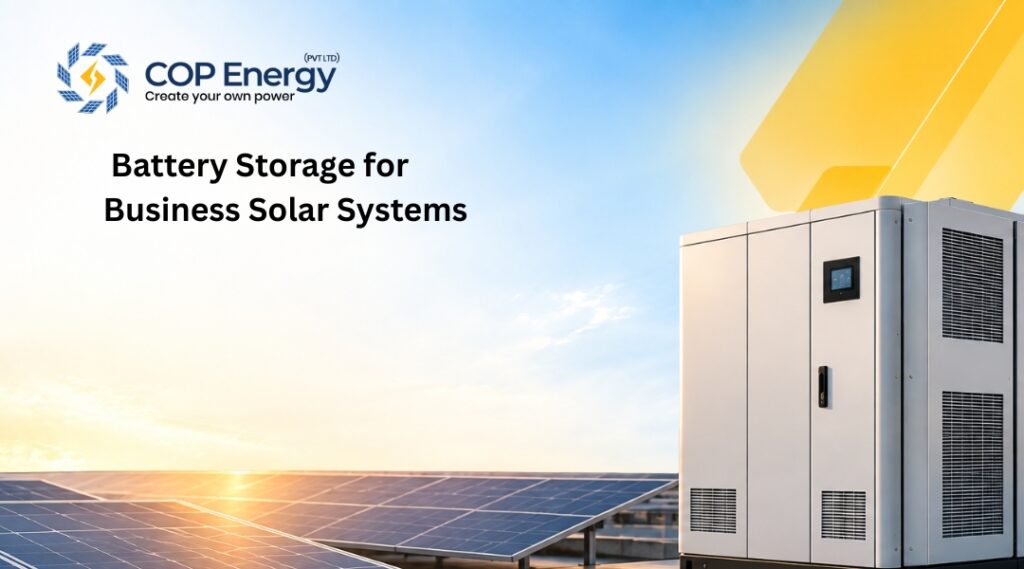
Solar PV does not generate electricity at night. Businesses requiring nighttime renewable electricity can evaluate a Battery Energy Storage System or other renewable-energy procurement arrangements.
7. How is industrial solar ROI calculated?
ROI should consider project cost, annual generation, electricity savings, O&M expenses, degradation, financing costs, taxes and the expected project life.
8. Is solar better than simply buying electricity from the grid?
There is no universal answer. Businesses should compare the long-term cost and operational characteristics of solar against their current electricity supply and future energy requirements.
Conclusion
Solar energy for textile and manufacturing industries can become an important strategy for businesses looking to manage electricity costs, improve renewable-energy consumption and strengthen long-term energy planning.
For textile mills, spinning units, weaving facilities, garment manufacturers and other industrial businesses, solar can offset electricity used by production machinery and supporting systems when generation and consumption profiles align.
The strongest approach is not simply to install as many solar panels as possible. Instead, businesses should begin with electricity-bill analysis, load profiling, energy auditing and site assessment.
From there, companies can compare rooftop solar, ground-mounted solar, open-access solar, captive renewable projects and battery storage based on their operational and financial requirements.
Explore More COP Energy Solutions
Plan an Industrial Solar Project
Discuss your facility’s load profile, site conditions and energy goals with COP Energy.
Contact COP Energy