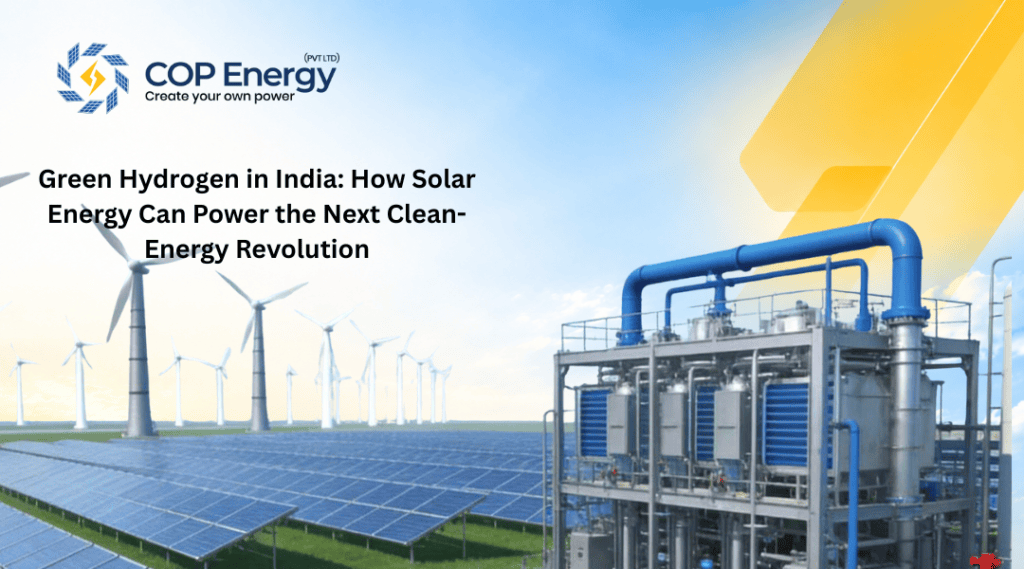
Green Hydrogen in India: How Solar Energy Can Power the Next Clean-Energy Revolution
Discover how renewable electricity, electrolyzers and integrated solar-energy systems can help build India’s green hydrogen economy.
Introduction
India’s transition toward cleaner energy is entering a new phase. Solar power, wind energy, battery storage and electric mobility have already become important parts of the country’s energy landscape. The next major opportunity could come from combining renewable electricity with green hydrogen.
Green hydrogen in India has the potential to support sectors where direct electrification can be difficult. Heavy industry, refining, chemicals, shipping and other energy-intensive sectors may require clean molecules in addition to clean electricity.
Solar energy can play a particularly important role. India’s significant solar potential and expanding renewable-power deployment provide a strong foundation for producing hydrogen through electrolysis.
Green hydrogen is produced by using renewable electricity to split water into hydrogen and oxygen. When solar or wind power is used, the resulting hydrogen can have substantially lower lifecycle greenhouse-gas emissions than fossil-fuel-based hydrogen, depending on the complete production pathway.
India’s National Green Hydrogen Mission provides a policy framework intended to develop domestic production, demand and supporting infrastructure.
What Is Green Hydrogen?
Hydrogen is an energy carrier rather than a primary energy source. Its environmental impact depends largely on how it is produced. Green hydrogen is generally produced using an electrolyzer powered by renewable electricity.
During electrolysis, electricity splits water molecules into hydrogen and oxygen. The hydrogen can then be stored, transported, used directly, converted into other chemicals, used as an industrial feedstock or supplied to fuel cells.
This makes hydrogen different from solar electricity: solar panels produce electricity directly, while green hydrogen converts renewable electricity into a storable chemical energy carrier.
Types of Electrolyzers Used for Green Hydrogen
Alkaline Electrolyzers
Alkaline electrolyzers are a relatively mature technology. They can be attractive for larger projects where established technology and long operating life are important.
PEM Electrolyzers
Proton Exchange Membrane (PEM) electrolyzers can respond quickly to changing electricity input, making them attractive when integrating variable renewable generation.
Solid Oxide Electrolyzers
Solid oxide electrolyzers operate at higher temperatures and have different efficiency and integration characteristics. They may be relevant where industrial waste heat or high-temperature processes are available.
The most appropriate technology depends on project size, electricity profile, renewable source, water availability, hydrogen purity, operating conditions, capital cost and maintenance requirements.
Major Applications of Green Hydrogen in India
1. Fertilizer Industry
Hydrogen is an important input for ammonia production. Replacing fossil-fuel-derived hydrogen with renewable hydrogen could help reduce associated emissions.
2. Refineries
Hydrogen is already used in several refinery processes. Green hydrogen could gradually replace some conventional hydrogen production.
3. Steel Industry
Hydrogen may support lower-carbon steelmaking pathways, particularly direct-reduced iron processes.
4. Chemicals
Renewable hydrogen could reduce the carbon intensity of selected chemical-manufacturing pathways.
5. Shipping
Hydrogen-derived fuels such as green ammonia and synthetic fuels could support maritime decarbonization.
6. Heavy Transport
Hydrogen fuel-cell technology may suit selected heavy-duty transport segments where battery-electric solutions face range or operational limitations.
Green Hydrogen and the Future of India’s Energy Sector
Solar and wind are effective for producing clean electricity, but some industrial processes require molecules rather than electrons. Hydrogen can potentially bridge this gap.
Rather than replacing solar or batteries, green hydrogen can complement them in applications requiring industrial feedstock or longer-duration energy storage.
Business Opportunities in Green Hydrogen
- Renewable-energy development: large solar and wind projects can supply hydrogen facilities.
- Electrolyzer manufacturing: growing demand can support domestic manufacturing.
- Engineering and EPC: projects require specialized design, procurement and construction.
- Hydrogen storage: safe storage infrastructure becomes more important as production scales.
- Industrial applications: existing hydrogen users can become early adopters.
- Hydrogen derivatives: green ammonia, methanol and synthetic fuels can broaden the market.
Role of Solar Companies in India’s Green Hydrogen Future
Solar companies can expand beyond standalone PV installations by participating in integrated renewable-energy projects involving green hydrogen, battery energy storage, EV charging, solar carports and commercial renewable-energy systems.
What Businesses Should Consider
Businesses should begin with the end application rather than simply purchasing an electrolyzer. A feasibility study should answer:
- How much hydrogen is required, and at what purity?
- Which renewable electricity source will be used?
- Are sufficient electricity and water available?
- How will hydrogen be stored and transported?
- Which safety and certification requirements apply?
- What is the expected cost per kilogram?
- Which incentives or policy mechanisms apply?
- Is there reliable long-term customer or industrial demand?
Green Hydrogen vs Battery Storage
The technologies are sometimes presented as competitors, but they usually serve different purposes.
| Feature | Battery Storage | Green Hydrogen |
|---|---|---|
| Best suited for | Short- to medium-duration electricity storage | Industrial feedstock and potentially longer-duration applications |
| Energy form | Electricity | Chemical energy |
| Round-trip efficiency | Generally higher | Generally lower when reconverted to electricity |
| Industrial feedstock | No | Yes |
| Transport applications | Strong for many EV categories | Potentially relevant for selected heavy transport |
| Core infrastructure | Batteries and power electronics | Electrolyzer, processing and hydrogen storage |
Frequently Asked Questions
1. What is green hydrogen?
Green hydrogen is hydrogen produced using renewable electricity, typically through water electrolysis.
2. How is green hydrogen produced using solar energy?
Solar panels generate electricity that powers an electrolyzer, which splits water into hydrogen and oxygen.
3. Why is green hydrogen important for India?
It could help decarbonize hard-to-electrify industries while supporting renewable generation, manufacturing and export opportunities.
4. What is the National Green Hydrogen Mission?
It is a Government of India initiative intended to develop production, demand, infrastructure and a wider ecosystem for green hydrogen and its derivatives.
5. Which industries can use green hydrogen?
Potential users include fertilizers, refineries, chemicals, steel, shipping and selected heavy-transport applications.
6. Is green hydrogen better than battery storage?
Neither is universally better. Batteries generally suit electricity storage over shorter durations, while hydrogen can also serve as an industrial feedstock.
7. What is an electrolyzer?
An electrolyzer is equipment that uses electricity to split water into hydrogen and oxygen.
8. Can solar power alone produce green hydrogen?
Yes, although project economics depend on solar availability, electrolyzer utilization, water, storage and other infrastructure.
9. What are the biggest challenges?
Key challenges include production and electrolyzer costs, renewable-electricity availability, water, storage, transport infrastructure and sufficient demand.
10. Is green hydrogen the future of renewable energy in India?
It is likely to become one component of India’s clean-energy system, particularly for industrial applications that are difficult to electrify directly.
Conclusion
Green hydrogen in India represents an important opportunity at the intersection of renewable energy, industrial decarbonization and advanced energy technologies.
India’s growing solar capacity provides a foundation for renewable electricity, while the National Green Hydrogen Mission is supporting the development of a domestic ecosystem. The broader opportunity is to integrate solar power, wind energy, battery storage, green hydrogen, industrial electrification and electric mobility.
Explore Integrated Clean-Energy Solutions
Discuss solar, battery storage, EV charging or commercial renewable-energy requirements with COP Energy.
Contact COP Energy Today →