Is Your Factory Roof Solar-Ready? A Structural and Electrical Readiness Checklist
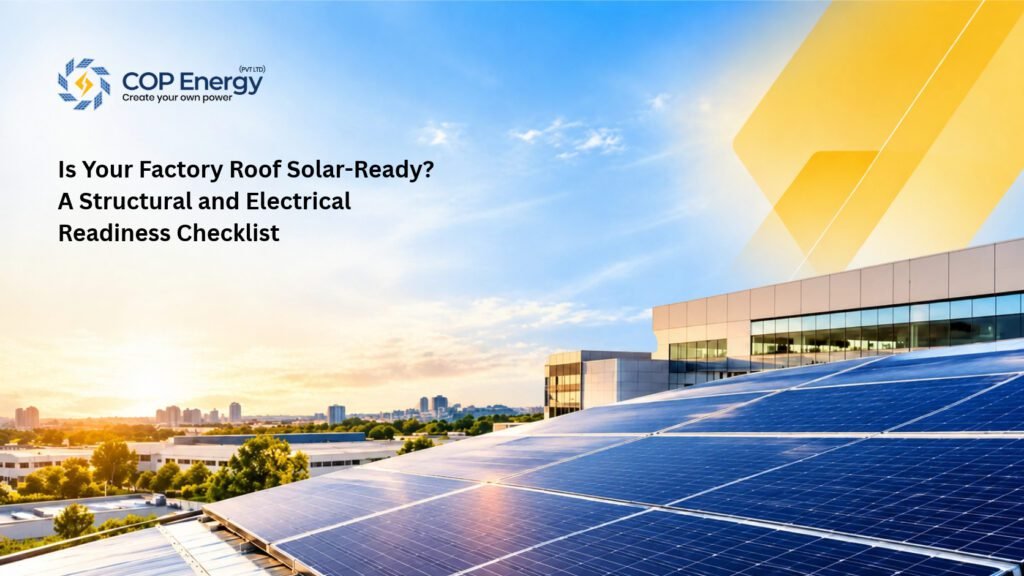
Installing rooftop solar panels is an effective way for factories to generate electricity on-site and potentially reduce grid electricity costs. However, before installing a solar power system, businesses must evaluate whether their roof, electrical infrastructure and operating conditions are suitable for the project.
A proper feasibility assessment helps identify structural limitations, installation challenges and avoidable costs before work begins. For manufacturing facilities, warehouses and industrial buildings, this preparation is particularly important because roof conditions and electricity demand can vary significantly.
COP Energy can be approached to discuss commercial and industrial solar requirements and evaluate the next steps for a suitable rooftop solar project.
1. Assess the Structural Condition of Your Factory Roof
Check roof strength and load-bearing capacity
Solar panels, mounting structures, cables and maintenance access introduce additional loads. The roof must be assessed by a qualified structural professional to determine whether it can safely support the proposed installation.
The assessment should consider:
- Existing structural drawings and roof construction.
- Additional dead loads from panels and mounting equipment.
- Wind uplift and other applicable design loads.
- Roof deterioration, corrosion, cracks or water damage.
- Safe access for installation and future maintenance.
Do not assume that an older roof is suitable simply because it has supported industrial equipment for years.
Inspect waterproofing and roof condition
Damaged waterproofing can lead to water ingress and costly repairs. Identify leaks, weak joints and drainage problems before installing mounting systems. Any roof repairs should be planned alongside the solar project.
2. Evaluate Electrical Infrastructure
Review connected load and electricity consumption
Examine at least 12 months of electricity bills, where available, to understand monthly consumption, demand charges and seasonal patterns. Review daytime electricity usage to estimate how much solar generation the factory can consume directly.
Check panels, transformers and grid connectivity
A qualified electrical engineer should evaluate the distribution board, transformer capacity, protection devices, earthing, cable routes and available connection capacity.
Grid-connected solar systems may require utility approvals, protection coordination, metering arrangements and compliance with applicable state regulations. Requirements vary by location and system configuration. The Ministry of New and Renewable Energy (MNRE) publishes official information on solar programmes and guidelines in India.
3. Check Shading, Orientation and Available Space
Identify shading and obstructions
Nearby buildings, exhaust stacks, water tanks and rooftop equipment can affect generation. A site survey should identify shading throughout the day and across relevant seasons.
Plan maintenance access and drainage
The entire roof should not be treated as usable panel space. Account for walkways, fire-safety access, drainage routes and equipment clearances when estimating installable capacity.
4. Review Safety and Installation Requirements
Before installation, review roof-edge protection, fall-prevention systems, emergency access, electrical isolation and safe working procedures. Coordinate the proposed layout with factory operations so that installation and maintenance do not unnecessarily disrupt production.
5. Prepare a Solar Feasibility Checklist
Use this checklist before requesting a quotation:
- Roof structure professionally assessed.
- Roof repairs and waterproofing reviewed.
- Electricity bills and daytime loads analysed.
- Electrical infrastructure inspected.
- Shading and usable roof area surveyed.
- Safety access and maintenance routes planned.
- Grid connectivity and approval requirements identified.
- Project cost, expected generation and financial returns evaluated.
For guidance on energy efficiency and energy-use planning, businesses can also refer to the Bureau of Energy Efficiency (BEE).
Conclusion: Start with Feasibility, Not Just Panel Capacity
A successful factory rooftop solar project begins with a clear understanding of the building, electricity demand and installation constraints. A professional feasibility assessment helps businesses make better decisions about system capacity, safety, project costs and expected performance.
Planning a factory rooftop solar installation? contact COP Energy to discuss your commercial solar requirements and the feasibility of your site.
Check Your Factory’s Solar Readiness
Start with a feasibility assessment of your roof, electrical infrastructure and energy demand before investing in a rooftop solar installation.
Contact COP Energy