Solar + EV Charging: How Homeowners Can Charge Electric Vehicles Using Solar Energy
Discover how Solar EV Charging helps homeowners reduce charging costs, maximize renewable energy usage, and enjoy a cleaner, smarter lifestyle with rooftop solar.
Introduction
The adoption of electric vehicles (EVs) is rapidly increasing across India as homeowners look for cleaner, smarter, and more cost-effective transportation solutions. At the same time, rooftop solar systems are becoming one of the most popular renewable energy investments for reducing electricity bills and achieving long-term energy independence. By combining a Solar EV Charging system with a rooftop solar installation, homeowners can generate clean electricity during the day and use it to charge their electric vehicles. This not only lowers charging costs but also minimizes carbon emissions and reduces dependence on conventional grid electricity. Whether you own an electric car today or are planning to purchase one in the future, integrating Solar Powered EV Charging with your home is a future-ready investment that delivers financial savings and environmental benefits for years to come.

Why Solar EV Charging is Becoming Popular
The combination of Rooftop Solar for EV charging has become increasingly attractive due to rising fuel prices, increasing electricity tariffs, and growing awareness of sustainable living. Homeowners are choosing solar energy because it allows them to generate clean electricity while significantly reducing the operating cost of their electric vehicles.
- Lower monthly electricity bills
- Reduced vehicle charging costs
- Less dependence on the electricity grid
- Cleaner transportation with renewable energy
- Government support for rooftop solar
- Higher property value
- Long-term return on investment
- Lower carbon footprint
Looking to install rooftop solar for your home? Explore Residential Solar Solutions offered by COP Energy to find the right system for your energy needs.
How Does Solar EV Charging Work?
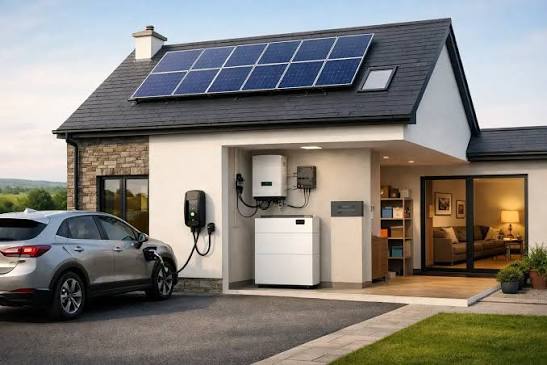
A typical Home EV Charging with Solar setup consists of rooftop solar panels, a solar inverter, an EV charger, and optionally a Battery Energy Storage System (BESS). During daylight hours, the solar panels generate electricity that powers your home and charges your electric vehicle. Any excess electricity can either be stored in a battery system or exported to the electricity grid through net metering, depending on your system configuration and applicable regulations.

Main Components of a Solar EV Charging System
| Component | Purpose |
|---|---|
| Solar Panels | Generate clean electricity from sunlight. |
| Solar Inverter | Converts DC electricity into AC electricity for home appliances and EV charging. |
| EV Charger | Safely charges your electric vehicle. |
| Battery Energy Storage System (BESS) | Stores excess solar energy for later use. |
| Net Meter | Exports surplus electricity to the utility grid where applicable. |
Choosing the Right Solar EV Charging System Size
Selecting the correct Solar EV Charging system depends on your daily driving distance, EV battery capacity, household electricity consumption, available rooftop space, and future energy requirements. Installing the right-sized system ensures maximum solar energy generation while minimizing dependence on grid electricity.

Factors to Consider
- Daily EV charging requirements
- Monthly household electricity usage
- Battery capacity of your electric vehicle
- Available rooftop area
- Roof orientation and shading
- Future purchase of additional EVs
- Installation of a Battery Energy Storage System (BESS)
Recommended Solar System Size
| Solar System | Suitable For |
|---|---|
| 3 kW | Small households with limited EV charging |
| 5 kW | Average family with one electric vehicle |
| 6–8 kW | Large homes with higher electricity consumption |
| 10 kW+ | Multiple EVs and high daily electricity usage |
How to Install a Solar Powered EV Charging System
Installing a Solar Powered EV Charging system requires careful planning and professional design to ensure maximum efficiency and long-term performance.
Step 1 – Site Assessment
A professional installer evaluates your rooftop area, structural strength, shading conditions, electricity consumption, and EV charging requirements.
Step 2 – Solar System Design
Based on the assessment, engineers determine the ideal number of solar panels, inverter capacity, EV charger type, and optional Battery Energy Storage System (BESS).
Step 3 – Installation
Certified technicians install the rooftop solar panels, inverter, electrical wiring, safety components, and EV charging station.
Step 4 – Testing & Commissioning
The complete system undergoes electrical safety testing, performance verification, and commissioning before it becomes operational.
Benefits of Home EV Charging with Solar
- Significantly lower vehicle charging costs
- Reduced dependence on conventional electricity
- Protection against rising electricity tariffs
- Clean renewable energy for transportation
- Improved energy independence
- Higher property value
- Reduced carbon emissions
- Long-term return on investment
- Supports India’s clean energy goals
Cost Savings with Solar EV Charging
Charging an electric vehicle using rooftop solar is substantially more economical than relying solely on grid electricity. Since the energy is generated from sunlight, homeowners can reduce both monthly electricity expenses and vehicle operating costs. Although the initial investment includes solar panels, an inverter, and an EV charger, the system continues generating electricity for more than 25 years with minimal maintenance.
| Expense | Grid Charging | Solar EV Charging |
|---|---|---|
| Fuel Cost | High | Very Low |
| Electricity Cost | Monthly Utility Bill | Mostly Solar Energy |
| Maintenance | Moderate | Low |
| Environmental Impact | Higher | Minimal |
Should You Install a Battery Energy Storage System (BESS)?
While battery storage is optional, integrating a Battery Energy Storage System (BESS) offers additional flexibility by storing surplus solar energy generated during the day for use at night or during power outages.
Benefits of BESS
- Night-time EV charging using stored solar energy
- Backup power during grid failures
- Greater energy independence
- Improved self-consumption of solar power
- Reduced peak electricity demand
Environmental Benefits of Solar EV Charging
Switching to a Solar EV Charging system offers more than financial savings. It significantly reduces greenhouse gas emissions by replacing fossil-fuel-based electricity with clean renewable solar power. Every kilometer driven using solar energy contributes to a cleaner environment and supports India’s transition toward sustainable transportation.
- Lower carbon footprint
- Reduced air pollution
- Supports renewable energy adoption
- Promotes sustainable mobility
- Conserves natural resources
Frequently Asked Questions (FAQs)
1. Can solar panels fully charge an electric vehicle?
Yes. A properly sized Solar EV Charging system can generate enough electricity to charge your electric vehicle. The required system size depends on your daily driving distance, EV battery capacity, and household electricity consumption.
2. What size solar system is ideal for charging an EV?
Most homeowners choose a 5 kW to 10 kW Rooftop Solar for EV charging system. The ideal capacity depends on the number of electric vehicles, daily charging requirements, and overall household energy usage.
3. Do I need a battery to charge my EV using solar?
No. You can charge your EV directly using solar electricity during daylight hours. However, installing a Battery Energy Storage System (BESS) allows you to store excess solar energy for charging your vehicle at night or during power outages.
4. Can I charge my electric vehicle during cloudy weather?
Yes. Solar panels continue generating electricity during cloudy conditions, although energy production may be reduced. Additional electricity can be drawn from the utility grid whenever required.
5. Is a smart EV charger worth installing?
Yes. Smart EV chargers provide features such as scheduled charging, mobile app monitoring, energy tracking, and solar-priority charging, helping homeowners maximize the use of renewable solar energy.
6. How long does it take to recover the investment?
The payback period depends on system size, electricity tariffs, solar energy production, and EV charging frequency. Over the lifespan of the solar system, homeowners can achieve significant savings on electricity and vehicle charging costs.
Useful Resources
For the latest information on rooftop solar, renewable energy policies, and EV adoption, refer to the following official resources:
- Ministry of New and Renewable Energy (MNRE)
- PM Surya Ghar: Muft Bijli Yojana
- Bureau of Energy Efficiency (BEE)
- International Energy Agency (IEA)
- NITI Aayog
Conclusion
The combination of Solar EV Charging and rooftop solar technology is transforming how homeowners power their electric vehicles. By generating clean electricity from the sun, families can significantly reduce charging costs, lower carbon emissions, and become less dependent on conventional grid electricity. Whether you are purchasing your first EV or upgrading an existing rooftop solar system, investing in a Solar Powered EV Charging solution is a smart, future-ready decision. With the right solar system size, an efficient EV charger, and an optional Battery Energy Storage System (BESS), homeowners can enjoy reliable, sustainable, and cost-effective transportation for decades. At COP Energy, we specialize in delivering customized Residential Solar Solutions, advanced EV Charging Solutions, and integrated energy storage systems tailored to the unique needs of every customer. From consultation and system design to installation and ongoing support, our experienced team helps you maximize the benefits of clean energy while ensuring long-term performance and savings.
Ready to Power Your EV with Solar?
Take the next step toward sustainable mobility with COP Energy. Our experts can help you design the ideal Solar EV Charging solution for your home.